








Where AI, technology and real conversations meet


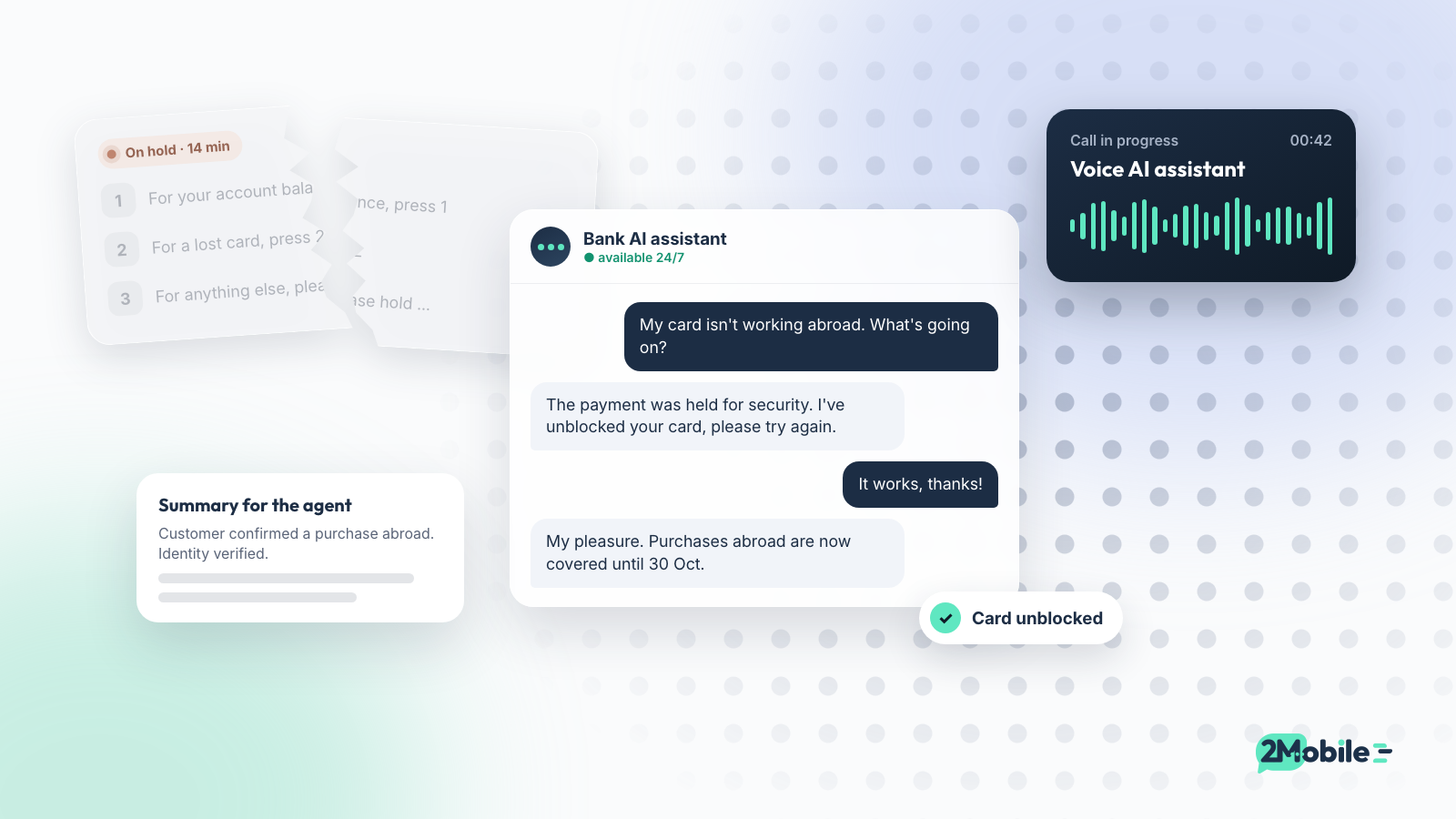
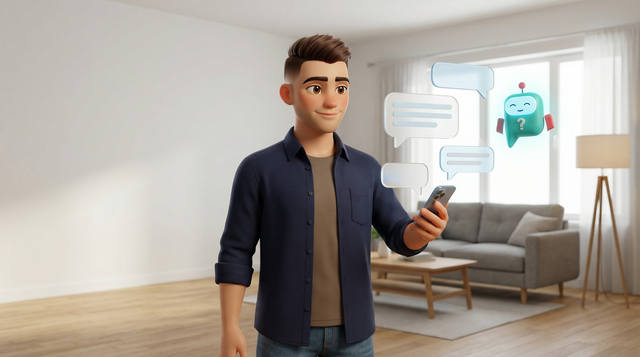
Think back to the last support call that started with "For your account balance, press 1". Or the chatbot that offered the same three buttons whatever you asked. Every new technology promised better customer service, and customers kept ending up in the same place: in a queue, in a menu with no real way out, repeating the same details. The numbers confirm it. According to Accenture's analysis The Future of Customer Service (October 2026), only 18% of customers say technology has significantly improved their service experience. At the same time, 87% of customers say a single bad service experience is enough to make them leave a brand entirely (Accenture Research, Customer service on the brink). So why would this time be different? Because what AI can do in a conversation has changed. At 2Mobile we see it every day, in projects with Slovenian companies.
If you know our work, this fits. We’ve always focused on what works in real life. Not demos, not concepts. Clear conversation flows, solid integrations, and solutions people actually use every day. Becoming an Authorized boost.ai partner is a natural next step for us. It gives us a stronger foundation to build on what we already do best. Deliver chat and voice solutions that don’t just respond, but actually handle real requests from users. What this means for you? When you work with us, this partnership translates into a few simple things: Faster setup We reduce the gap between idea and go-live. No unnecessary delays. Conversations that do the job Not just answering questions, but resolving them. From simple queries to more complex user journeys. Easy fit with your systems We connect everything properly. CRM, backend systems, APIs. No workarounds. How we approach projects? We keep things simple and structured. We build. We connect. We test. We improve. And then we keep improving based on real usage. That’s where most of the value comes from.
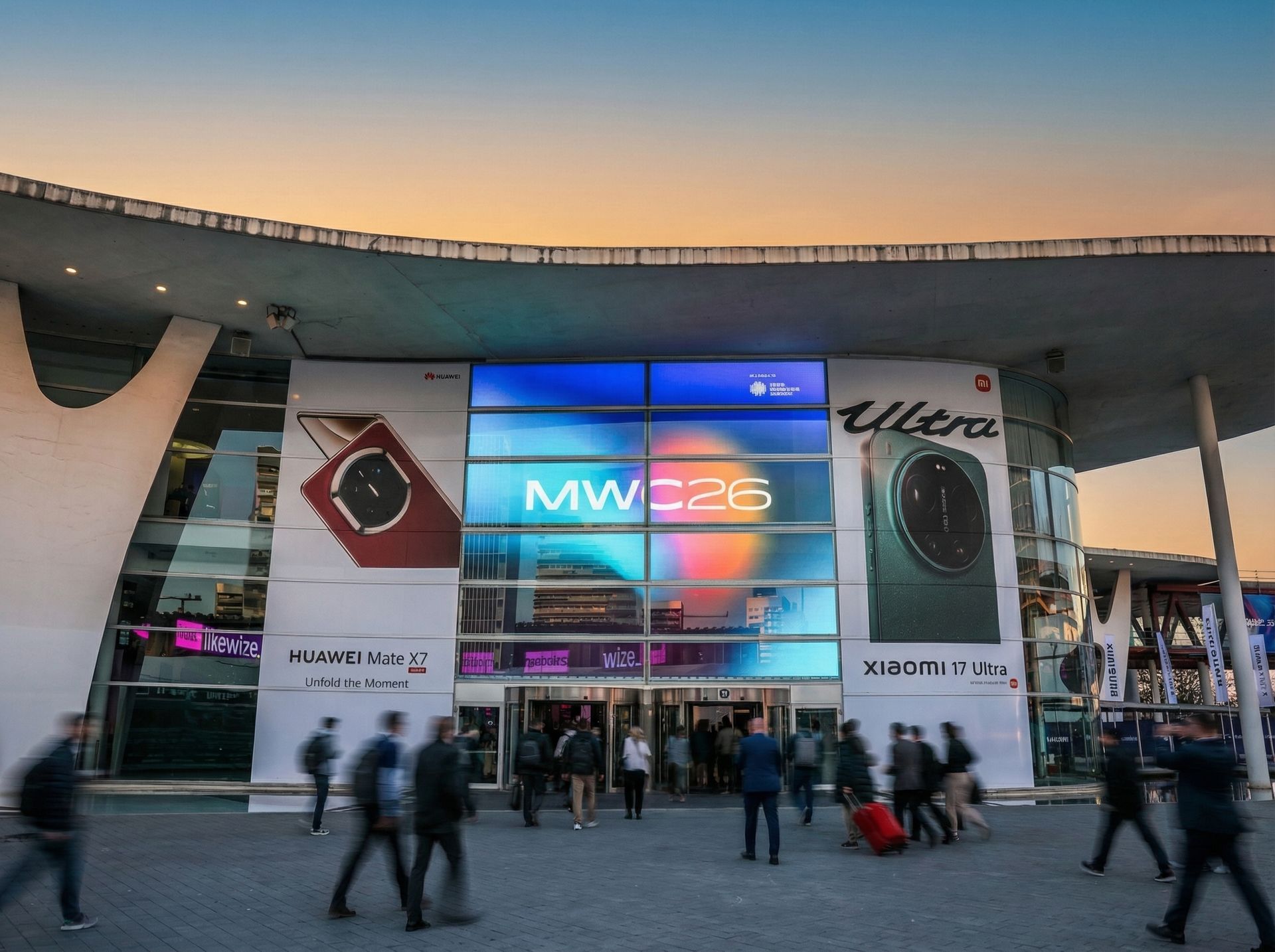
The rise of AI-native companies One of the recurring themes across panels and presentations at MWC 2026 was the rise of AI-native companies . These are organizations that haven’t simply added AI to existing workflows — they have built their entire operations around AI from the ground up . This approach gives them several significant advantages: faster decision-making higher levels of automation the ability to process large volumes of data in real time greater agility in responding to market changes The gap between AI-native companies and traditionally structured organizations will likely continue to grow. While many established companies struggle to integrate AI into legacy systems, AI-native organizations can innovate and scale much faster. AI as the operating system of the enterprise Another important takeaway from this year’s MWC is that artificial intelligence is increasingly shifting from being a tool to becoming core business infrastructure . Today, AI is often seen as a feature within individual applications. In the near future, however, it will function more like the operating system of the organization . This means AI will support and influence nearly every part of the business: Finance teams will use AI for forecasting, cost optimization, and data-driven decision-making. Operations will continuously optimize processes in real time. Sales and marketing will rely on predictive insights to better understand customer needs. Customer success teams will identify potential churn before customers even experience dissatisfaction. This level of integration will allow companies to operate more efficiently, make faster decisions, and deliver significantly more personalized customer experiences.

A case study of an AI assistant implementation with a high level of automation and user satisfaction.

Olympic Assistant for the Milano Cortina 2026 Winter Olympic Games

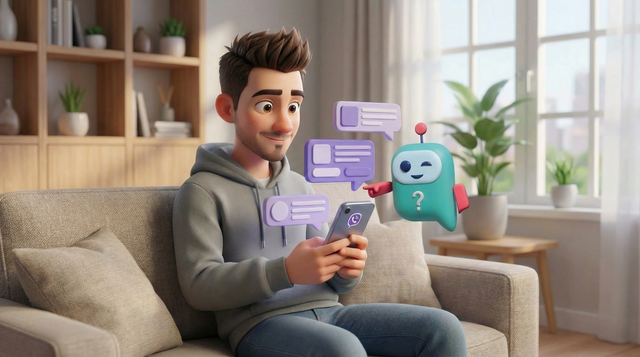
Viber is a powerful channel for festive promotions and conversational marketing. Reach customers with rich messages, higher engagement, and measurable results.
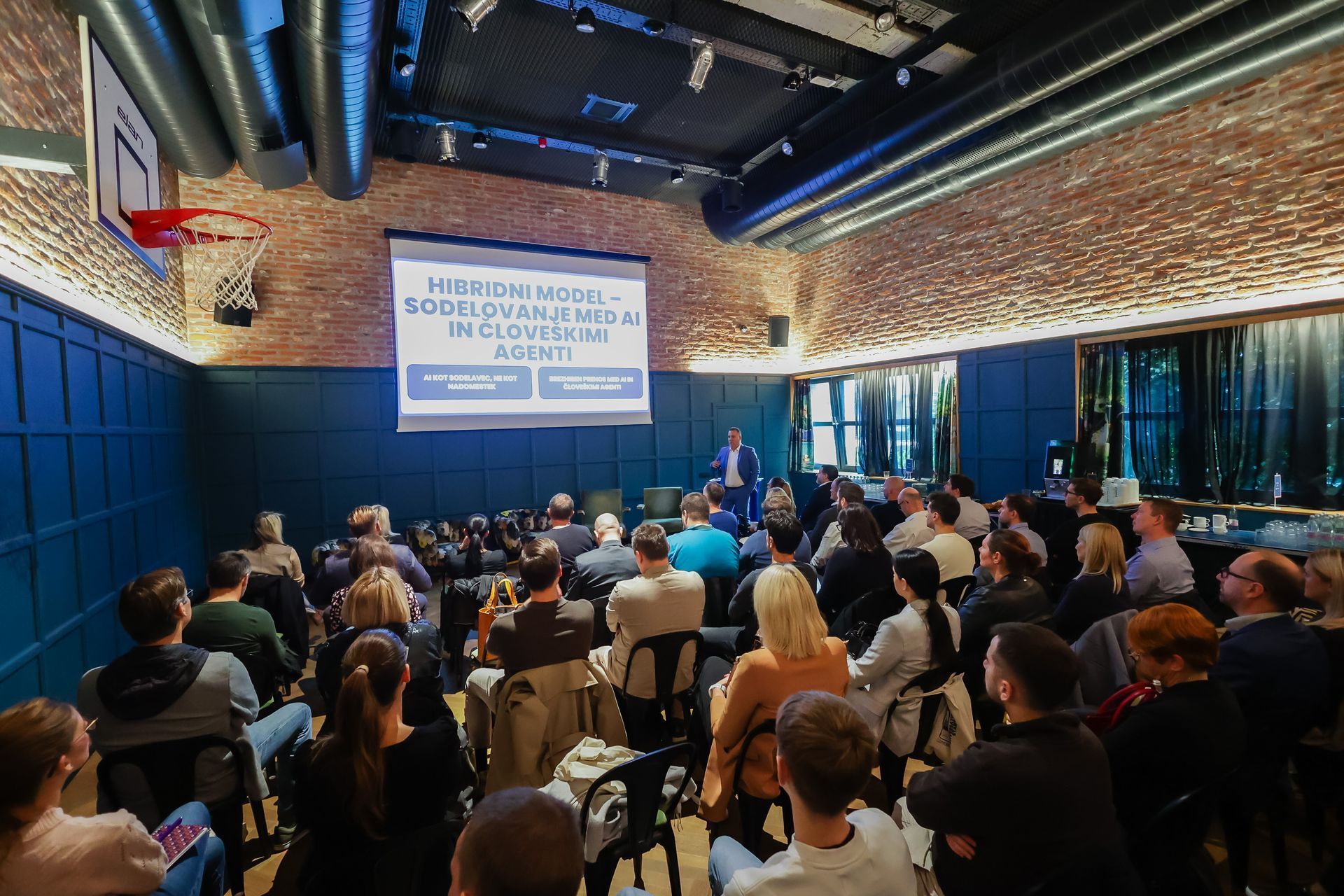
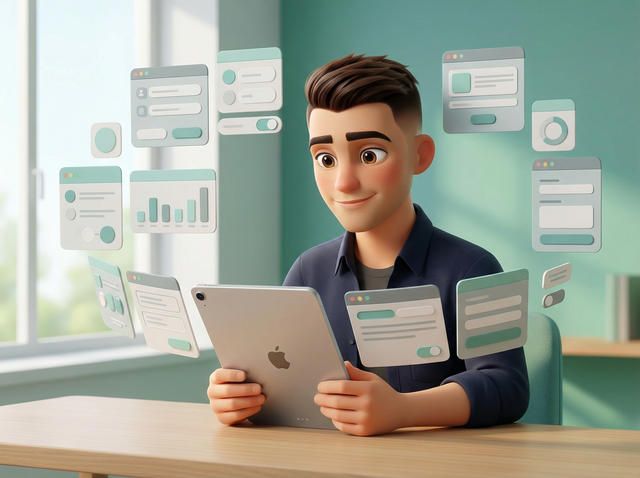
Hybrid AI models combine automation and human control to improve efficiency, scalability and competitiveness in modern business environments.

A roundtable discussion on why adopting AI is critical for business competitiveness, long-term growth and staying ahead in a rapidly changing market.

AI-based voice bots, featuring natural language processing and speech recognition, are becoming key to improving customer experiences and optimising business operations. Already prevalent in Scandinavia and the US, this technology enables modern and efficient communication between businesses and customers. Forward-thinking companies will leverage voice interfaces, such as Siri and Alexa, and natural conversation capabilities of ChatGPT to significantly improve both customer experience and call centre operations. Let's take a look at how these voice bots work, the wide-ranging benefits they offer and the challenges faced by companies already deploying them. How voice bots work AI-powered voice bots are not just automated answering machines; they are complex systems designed to mimic human interaction naturally and intuitively. Their advantage lies in their growing resemblance to live agents while giving users a greater degree of anonymity as well as faster resolution of requests. Voice bots are based on several key technological components: Automatic speech recognition (ASR) converts speech into text and lays the foundation for further interaction. Natural Language Understanding (NLU) analyses the text to identify key information such as intent and context. The conversation module uses the insights gained to formulate accurate and contextually relevant responses. The text-to-speech (TTS) system converts the textual responses back into speech, allowing bots to communicate naturally and understandably.